
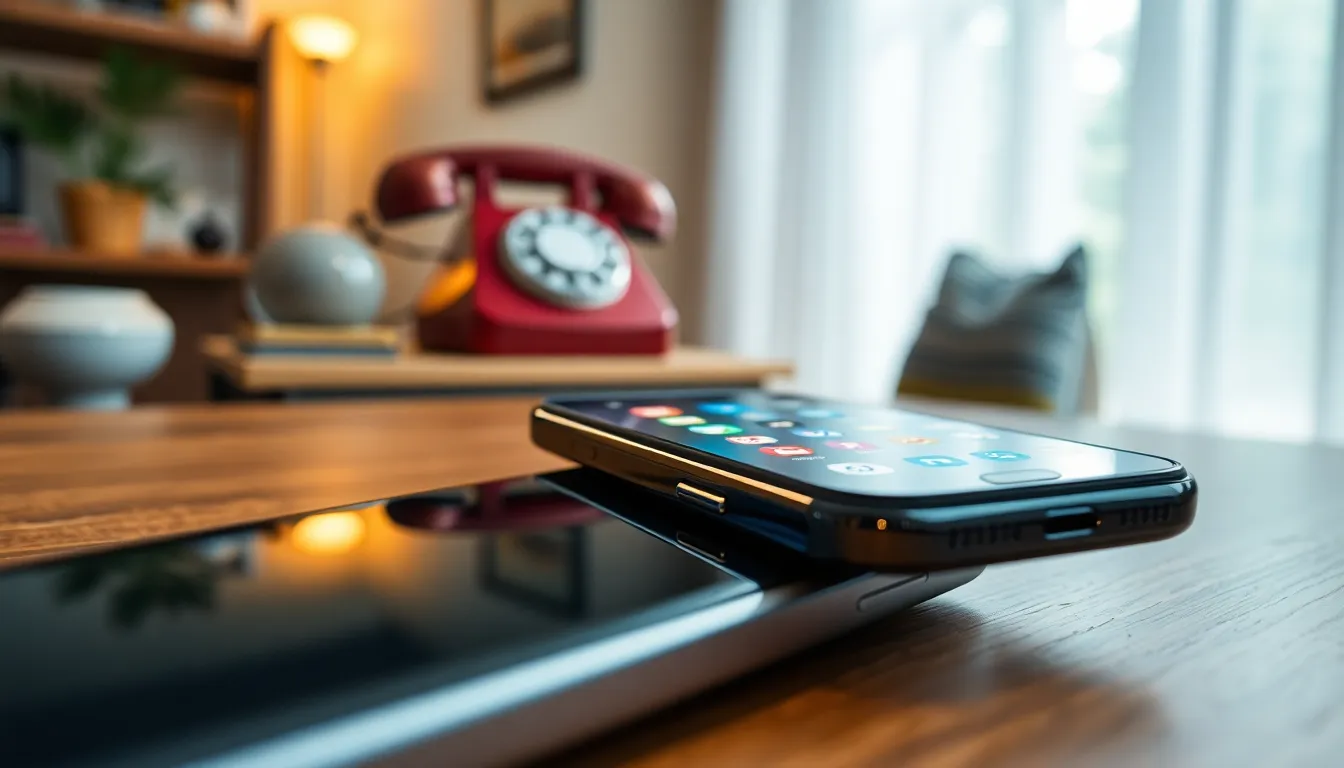
From clunky rotary dials to sleek smartphones that fit in a pocket, the evolution of phones is nothing short of a technological rollercoaster. Imagine trying to explain to your grandparents that the tiny device they see today can do everything from ordering pizza to capturing high-definition selfies. It’s like watching a sci-fi movie unfold in real life!
Evolution of Phones
Phones have undergone significant transformations over the years, evolving into sophisticated technologies that redefine communication.
The Early Years: 1876 – 1960
The invention of the telephone in 1876 marked the beginning of a new era. Alexander Graham Bell’s device allowed voice transmission, revolutionizing communication. By the early 1900s, phones used rotary dials, which became standard for several decades. The introduction of carbon microphones improved sound quality and made conversations clearer. In the 1950s, the first commercial mobile phone systems emerged, enabling limited mobility. These early phones laid the groundwork for modern devices, pushing the boundaries of connectivity.
The Rise of Landlines: 1960 – 1990
The 1960s saw a boom in landline usage across households. Phone companies installed millions of lines, making communication more accessible. Touch-tone dialing replaced rotary dials in the 1970s, speeding up the dialing process. By the 1980s, answering machines became a household staple, allowing people to retrieve messages remotely. Moreover, the introduction of cordless phones in the late 1980s provided increased mobility within homes. These advancements set the stage for the shift towards portable communication devices.
The Advent of Mobile Phones
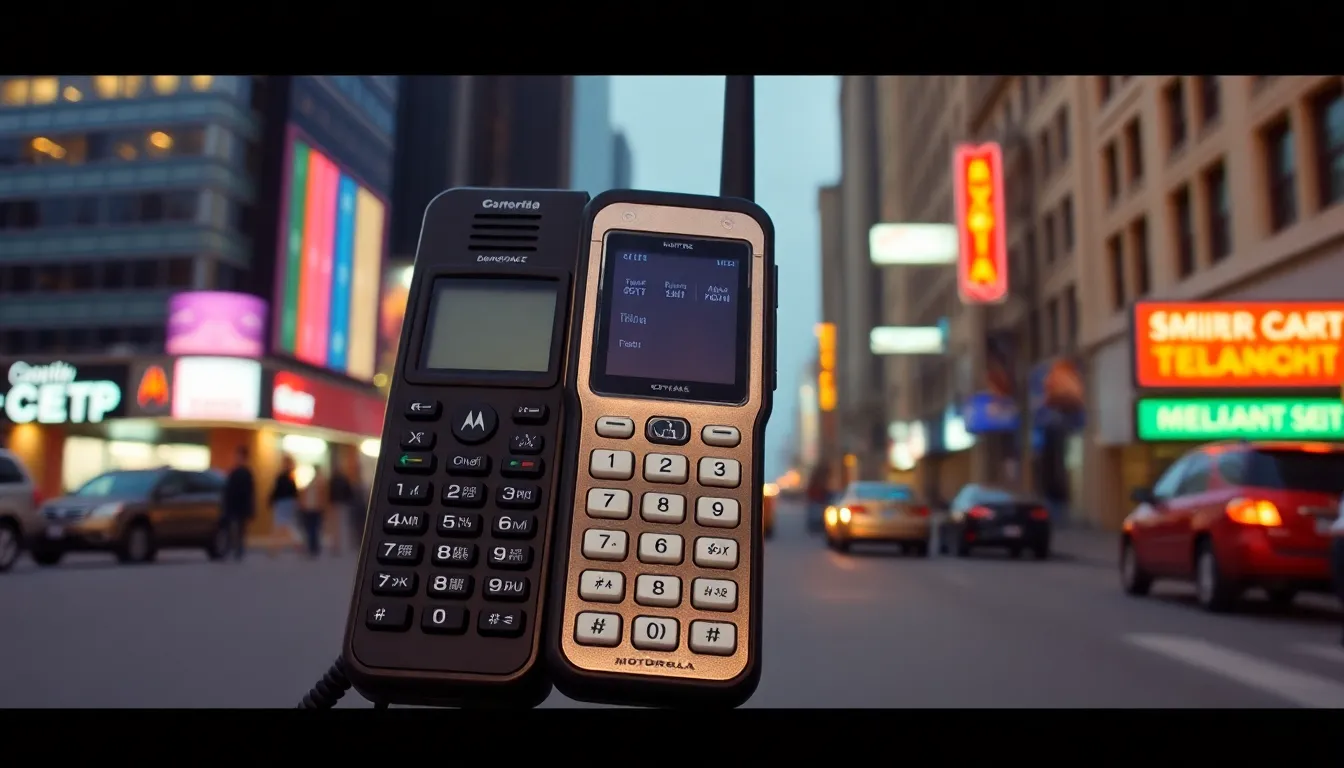
Mobile phones transformed communication by introducing portability and convenience. Their evolution represents a significant leap from stationary landline phones.
First Generation: 1980s – 1990s
First-generation mobile phones debuted in the 1980s, featuring analog technology. These bulky devices, often referred to as “brick phones,” marked a drastic change in phone usage. Users in the early 1990s experienced increased mobility but faced limitations, like poor battery life and limited call quality. Motorola’s DynaTAC 8000X, introduced in 1983, became the first commercially available mobile phone, costing nearly $4,000. Users could make calls from almost anywhere, signifying the dawn of a new era in communication.
Second Generation: 1990s – Early 2000s
Second-generation mobile phones emerged in the late 1990s, introducing digital technology. This advancement brought improved sound quality and greater capacity for data transmission. GSM networks became popular during this period, expanding coverage and enabling international roaming. By the early 2000s, features like text messaging and caller ID became standard, making communication more efficient. Devices like the Nokia 5110 gained widespread popularity, known for its durability and long battery life, furthering the transition into user-friendly mobile communication.
Smartphones Revolution
Smartphones transformed communication, blending functionality with convenience.
The Birth of Smartphones: 2000 – 2010
Smartphones emerged in the early 2000s, marking a significant shift in mobile technology. The release of the BlackBerry 850 in 1999 laid the groundwork with email capabilities. In 2007, Apple introduced the iPhone, integrating a user-friendly interface along with internet connectivity. This device set a new standard for mobile applications. The introduction of Android OS in 2008 further democratized smartphone access, leading to diverse options for consumers. These innovations combined to create a competitive smartphone market, fostering rapid advancements in features and designs.
The Rise of Touchscreens: 2010 – Present
Touchscreens revolutionized smartphone interaction, dominating the market since the early 2010s. In 2010, Apple’s iPhone 4 showcased Retina Display, enhancing visual clarity. Competitors quickly adopted touch technology, incorporating larger screens and improved resolutions. Manufacturers began emphasizing user experience alongside aesthetics. By 2013, the Samsung Galaxy S4 highlighted voice controls and gesture recognition, expanding functionality. This ongoing focus on touchscreen innovation continues to shape the smartphone landscape, ensuring devices remain versatile and engaging for users.
Impact on Society
Phones significantly influenced society, shaping communication and connectivity. Their evolution impacted daily interactions and social structures.
Communication Changes
Landline phones initiated a new era of verbal communication, enabling people to converse over long distances. Mobile phones introduced a new level of portability, allowing conversations to occur anywhere, anytime. Text messaging emerged as a vital communication method, giving individuals the ability to convey messages quickly and discreetly. The rise of smartphones further transformed communication, integrating video calls and instant messaging within a single device. This constant accessibility altered how relationships are formed and maintained. Real-time communication became standard, leading to an expectation of immediate responses.
Social Media and Connectivity
Social media platforms flourished alongside smartphones, connecting millions globally. Users share updates, photos, and videos instantly, creating virtual communities around shared interests. The integration of social media apps into phones streamlined interactions, fostering connections that transcend geographical barriers. Friendships and relationships now form primarily online, with digital interactions becoming commonplace. Businesses leverage these platforms for marketing and customer engagement, reshaping how they connect with consumers. News and information spread rapidly through social channels, influencing public opinion and social movements. User-generated content dominates, encouraging everyone to contribute to discussions and share perspectives.
The journey of phones from the invention of the telephone to today’s sophisticated smartphones showcases an incredible transformation in communication. Each advancement has not only improved functionality but also redefined how people connect and interact. As technology continues to evolve, it’s clear that phones will play an even more integral role in daily life.
The future promises even more innovations that will further enhance connectivity and redefine relationships. Understanding this evolution highlights the importance of adapting to new technologies while appreciating the rich history that shaped them. The impact of phones on society is undeniable and will continue to influence the way individuals communicate for generations to come.


