
Remember the days when phones were more about personality than pixels? The 2000s brought a wild array of quirky designs and features that made texting an art form and ringing tones an anthem. From flip phones that could withstand a minor apocalypse to the iconic Nokia 3310, these gadgets were the ultimate status symbols.
Overview of Phones From The 2000s
Phones in the 2000s showcased a blend of style, function, and innovation. This era marked the transition from basic mobile devices to more sophisticated smartphones. Iconic models like the Motorola Razr became cultural symbols of elegance and portability, appealing to tech enthusiasts and casual users alike.
Nokia dominated the market with the 3310, renowned for its durability and user-friendly interface. This phone not only boasted impressive battery life but also introduced popular features like customizable ringtones and the addictive Snake game. Users engaged in friendly competitions to achieve high scores.
Camera technology saw significant advancements during this decade. The introduction of built-in cameras transformed how people captured moments. Early models with VGA cameras provided users the ability to take snapshots, albeit with lower quality compared to today’s standards.
Texting evolved into a popular communication method, emphasizing brevity and creativity. Predictive text technology changed the landscape, facilitating quicker messaging. This shift led to the emergence of texting slang, which became a fundamental aspect of communication.
Distinct ringtones played a vital role in personalizing devices. Many opted for proprietary ringtones that reflected individual tastes, enriching the mobile experience. As the decade progressed, phones began incorporating features like music players and internet connectivity, paving the way for the smartphone revolution.
The 2000s laid the groundwork for smartphones, demonstrating how mobile technology could enhance daily life. Captivating designs coupled with emerging features redefined user expectations. The impact of this decade’s innovations continues to resonate in modern smartphones, influencing current designs and functionalities.
Major Brands and Models
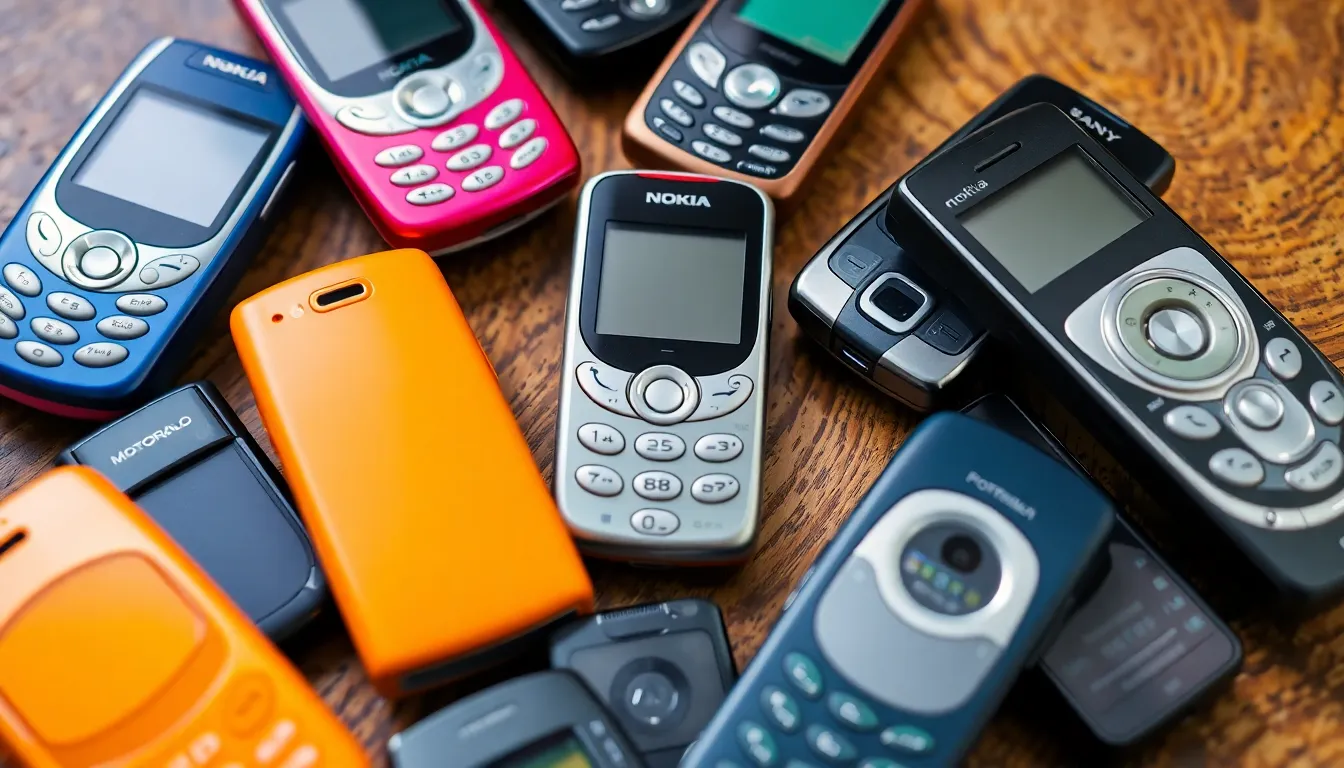
Phones from the 2000s showcased a variety of brands and models that defined the era. Each brand brought unique features and innovations to the market.
Nokia’s Dominance
Nokia dominated the mobile phone market during the 2000s. The Nokia 3310 became iconic due to its durability and long battery life. Users appreciated customizable ringtones and the famous Snake game, making it a staple among teenagers. By focusing on reliability and usability, Nokia ensured its phones remained popular despite emerging competition. Other models like the Nokia 6610 offered vibrant designs, appealing to a younger demographic. With its emphasis on robust functionality, Nokia set the standard for mobile devices.
Motorola’s Innovations
Motorola introduced several groundbreaking innovations in phone design. The Motorola Razr, released in 2004, revolutionized the flip phone market with its sleek, thin profile. Users admired its elegant design and vibrant color options, which made it a fashion statement. Enhanced features, including a camera and customizable wallpapers, further attracted consumers. In addition to the Razr, models like Motorola C650 provided users with solid functionality in a compact form. Motorola’s creative approach significantly influenced mobile aesthetics during the decade.
Sony Ericsson’s Style
Sony Ericsson focused on blending style and multimedia capabilities in its phones. The Sony Ericsson K750i, launched in 2005, featured a 2-megapixel camera, appealing to photography enthusiasts. Users enjoyed its Walkman branding, integrating music playback into a mobile device. Unique designs with vibrant colors distinguished Sony Ericsson from competitors. Models like the T610 combined functionality with appealing aesthetics, making them popular among style-conscious consumers. This commitment to innovation cemented Sony Ericsson’s status in the market during the 2000s.
Features That Defined The Era
The 2000s showcased distinctive features that made mobile phones memorable. Unique designs and functionalities marked a turning point in mobile technology.
Flip Phones and Slide Phones
Flip phones reigned supreme with their compact design and novelty. Ease of use marked these devices, allowing users to snap the phone shut to end calls. Models like the Motorola Razr stood out for their style and portability. Slide phones captured attention with their sliding mechanisms and touch screens, providing additional screen real estate. Each design element added to the allure, making these phones trendy accessories.
Cameras and Multimedia Capabilities
Cameras began appearing in phones, introducing the ability to capture moments on the go. Early models offered low-resolution images yet opened doors to instant photography. Notably, Sony Ericsson’s K750i combined a camera with multimedia playback, appealing to users wanting versatility. Music players also emerged in phones, enhancing entertainment options. With these advancements, phone users enjoyed a budding multimedia experience.
Ringtones and Personalization
Ringtones turned phones into personal statements. Customizable tones allowed users to express individuality through diverse sounds and melodies. Popular options included snippets from songs and funny sound bites. Furthermore, the trend of using ringtones to showcase personalities surged in popularity. Texting slang evolved alongside personalization, enriching the mobile culture of the era.
The Impact of Phones From The 2000s
Phones from the 2000s revolutionized how people communicated and interacted with technology. These devices introduced features that transformed social dynamics and mobile culture.
Shaping Communication
Texting became mainstream during the 2000s, thanks to features like T9 predictive text that simplified messaging. Users relied on phones for fast communication, leading to the rise of texting slang and shorthand. Additionally, the convenience of mobile phones facilitated connections over long distances, creating new social norms. Friends and family shared moments instantly, reshaping the concept of immediacy in communication. Moreover, introducing customizable ringtones allowed users to express their personalities, deepening their emotional connection to the device.
Influence on Modern Smartphones
Modern smartphones trace their evolution back to the innovations of the 2000s. The incorporation of cameras in phones laid the groundwork for today’s high-resolution photography. Features such as touchscreens and multi-functional capabilities emerged, inspiring the design of contemporary smartphones. Companies that thrived during this era, like Nokia and Motorola, set benchmarks for quality and aesthetics. Sleek designs and multimedia functions became standard expectations. Today’s smartphones reflect the legacy of the 2000s, combining style and functionality while maintaining the spirit of user personalization seen in earlier models.
The phones of the 2000s were more than just communication tools; they were cultural icons that shaped an entire generation. With their unique designs and innovative features, these devices fostered a sense of individuality and connection. The era’s blend of functionality and style set the stage for the smartphones we rely on today.
As users embraced texting and personalized ringtones, they transformed mobile communication into a vibrant form of self-expression. The legacy of these phones continues to influence modern designs, reminding everyone of a time when mobile technology was both charming and groundbreaking. The 2000s will always be remembered as a pivotal decade in the evolution of mobile phones.


