

When it comes to staying connected, even the most advanced tech can feel like a riddle wrapped in a mystery for dementia patients. Navigating the world of smartphones can be daunting, especially when those beloved devices seem to have more buttons than a space shuttle. But fear not! There are phones designed specifically with simplicity in mind, ensuring that making a call doesn’t require a PhD in technology.
Overview of Phones for Dementia Patients
Phones designed for dementia patients focus on simplicity and ease of use. Many feature large buttons and clear displays, minimizing the confusion that often accompanies advanced technology. These devices typically have straightforward interfaces with limited options, allowing users to make calls easily without navigating complex menus.
Developers prioritize features that enhance communication. One common attribute is the speed dial function, which enables users to contact family members or caregivers with a single press, ensuring quick access to support when needed. Some models also include emergency buttons for immediate assistance.
Durability is another essential aspect. Phones targeting dementia patients often come with enhanced build quality to withstand everyday accidents. Everyday scenarios can lead to drops and spills, making robust designs crucial for longevity.
Accessibility improvements further enhance usability. Voice commands are increasingly common, allowing users to make calls or send messages without needing to handle the device directly. This hands-free capability benefits individuals who may experience mobility challenges.
Customization options also play a significant role. Family members or caregivers can tailor settings according to individual needs. Common adaptations may include adjusting text sizes or limiting contact lists to reduce confusion.
Lastly, the battery life of these phones is critical. Long-lasting batteries ensure that devices remain functional throughout the day, minimizing the likelihood of missed communications. Reliability in power means peace of mind for both patients and their families.
Key Features to Look For
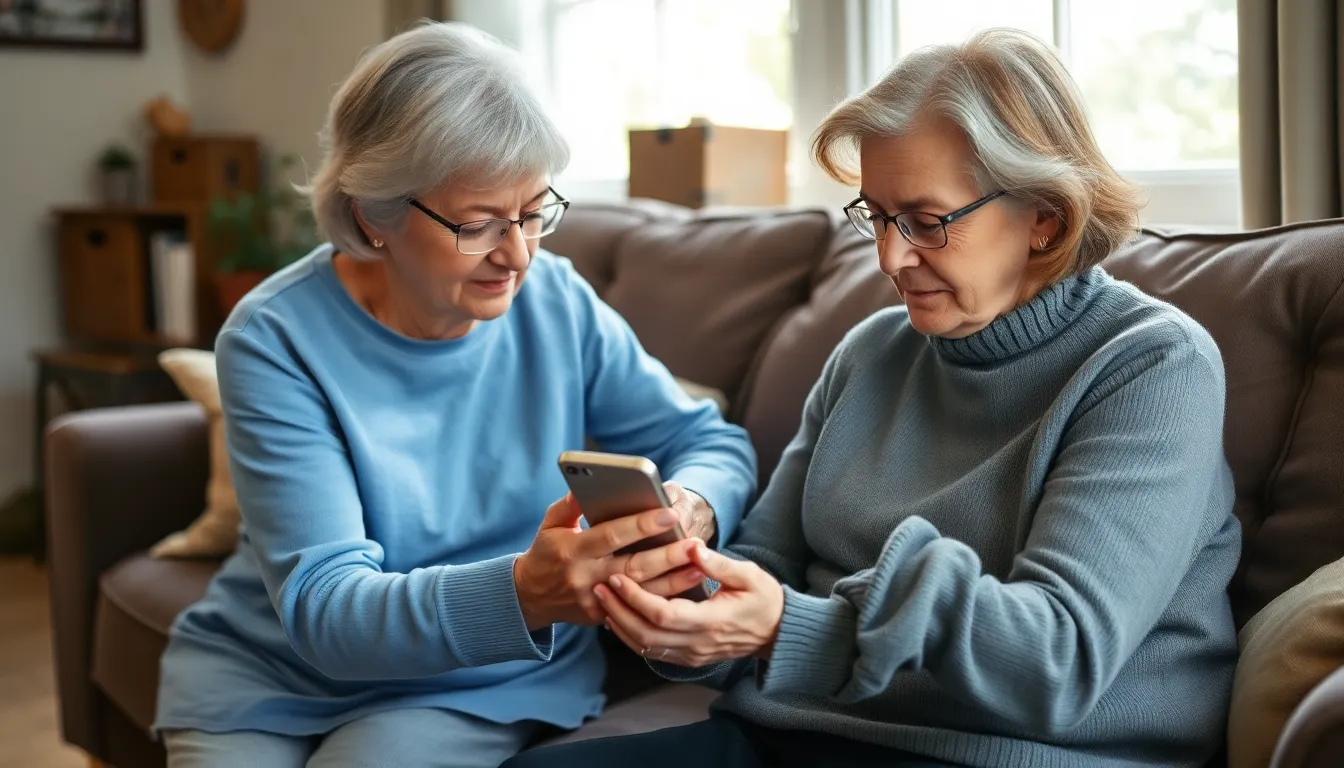
Dementia patients benefit from select phone features designed for simplicity and safety. Prioritizing specific functionalities can significantly improve their communication experience.
User-Friendly Interfaces
User-friendly interfaces are crucial for dementia patients. Large, clearly labeled buttons enable easy dialing. Simple design reduces the chances of confusion, allowing users to navigate quickly. Touchscreens may include simplified apps for essential functions, like calling or messaging. Visual cues enhance usability by guiding users in finding what they need. Many phones offer customizable display settings, increasing text size and contrast for better visibility. All these elements create an intuitive experience tailored to individuals with cognitive challenges.
Emergency Features
Emergency features provide vital safety nets for users. One-touch emergency buttons allow immediate access to caregivers or family members. Phones often incorporate pre-programmed numbers for urgent situations. Accessibility to location tracking helps families locate patients when needed. Some models include emergency alert systems that notify contacts automatically. Reliable battery life ensures that emergency functions remain operational throughout the day. Each of these features supports the well-being of dementia patients, giving added peace of mind to families and caregivers.
Top Phone Models for Dementia Patients
Several phone models cater specifically to the needs of dementia patients, ensuring ease of use and accessibility.
Phone Model 1
The Doro 8050 stands out for its large touchscreen and simple interface. Users appreciate its straightforward menu, which minimizes confusion. An integrated assistance button allows quick access to emergency help. Family members can personalize speed dial settings to connect loved ones effortlessly. Additionally, the phone boasts a powerful battery, providing reassurance with long-lasting communication.
Phone Model 2
Grandpad offers a unique tablet-style design focused on seniors. Its user-friendly interface includes large icons tailored for easy navigation. Families can preload contacts and applications, ensuring dementia patients stay connected with ease. Voice command features enhance accessibility, making calls simpler without complex actions. Provide peace of mind with its built-in security for safe browsing and emergency access.
Phone Model 3
The Jitterbug Flip2 combines functionality with simplicity. Users benefit from a bright display alongside large buttons that are easy to press. An emergency button situated on the back guarantees immediate response in urgent situations. Pre-programmed contacts ease communication with family and caregivers. Long-lasting battery life ensures that the device remains operational throughout the day, crucial for users who may forget to charge regularly.
Benefits of Using Phones for Dementia Patients
Using phones specifically designed for dementia patients provides numerous advantages that enhance their communication capabilities. Simplified interfaces help users navigate easily, as large buttons and clear displays minimize confusion. Speed dial options allow quick access to family and caregivers, ensuring immediate support when needed.
Emergency features play a crucial role in user safety. One-touch buttons enable direct contact with caregivers during urgent situations, while location tracking offers family members peace of mind regarding their loved one’s whereabouts. Long-lasting battery life ensures reliable communication throughout the day, reducing anxiety for both users and their families.
Customization empowers families to tailor phone settings according to individual needs. Personalized display settings accommodate cognitive challenges, enhancing usability in daily interactions. Accessibility improvements, such as voice commands, facilitate navigation, particularly for those with mobility constraints.
Using models like the Doro 8050, dementia patients benefit from an integrated assistance button, providing immediate help when required. The Grandpad, with its tablet-style design, features large icons and preloaded contacts simplifying calls. Additionally, the Jitterbug Flip2 showcases not only a bright display and large buttons but also an emergency button aimed at keeping users connected.
Social engagement remains vital for those with dementia. Phones encourage interaction with friends and family, fostering emotional well-being and reducing feelings of isolation. Via communication tools, patients can maintain relationships, which contributes positively to their quality of life.
Investing in specially designed phones enhances the overall well-being of dementia patients. These devices not only make communication simpler but also promote independence and security, ensuring that users stay connected with their loved ones.
Considerations Before Purchasing
Selecting a phone for a dementia patient involves understanding specific needs. Simplicity stands at the forefront; complex technology often overwhelms these individuals. Prioritizing user-friendly interfaces is crucial, as large buttons and clearly labeled icons enhance usability. Look for phones that feature customizable settings, allowing family members to adjust interfaces according to individual preferences.
Durability is another key factor. Robust designs withstand everyday accidents, ensuring reliability during daily use. Consider phones with long battery life to guarantee consistent communication throughout the day. Emergency features, such as one-touch buttons for caregivers and location tracking, offer added security.
Voice command functionality greatly improves navigation for those with mobility challenges. Phones making social engagement easy encourage regular interaction with family and friends. Models like the Doro 8050 and Jitterbug Flip2 exemplify these beneficial features. The Doro 8050 includes an integrated assistance button, while the Jitterbug Flip2 showcases a bright display and emergency function.
Evaluate the learning curve associated with any chosen device. New technology may cause confusion, so opting for a phone with straightforward instructions aids both users and caregivers. Integration of visual cues fosters better comprehension, aiding in reducing frustration.
Assessing specific needs and preferences remains essential. Each patient’s requirements may differ, requiring a tailored approach when selecting a phone. Consideration of these factors ultimately influences the experience, enhancing communication and fostering a sense of independence.
Choosing the right phone for dementia patients can significantly improve their quality of life. By prioritizing simplicity and ease of use, these specially designed devices empower individuals to maintain connections with family and friends. Features like large buttons, emergency options, and customizable settings ensure that communication remains accessible and secure.
Investing in a phone tailored to their needs not only fosters independence but also enhances emotional well-being. With reliable technology that supports meaningful interactions, families can have peace of mind knowing their loved ones are safe and connected. Ultimately, the right phone can make a world of difference in the daily lives of dementia patients.


